一直想取消WordPress的汉化,因为比较喜欢博客主题界面上面的英文模块。今天晚上终于想要自己动手改一下。可是自己其实不懂。于是通过gmail聊天室向达人胡戈戈请教。胡戈戈乐善好施,给我指点了很多迷津。非常感谢胡戈戈。
成功了!我很满意。顺便记住这个路径,没准儿以后还想用:public_html-wp config_php。
勤奋一点,总是会有收获的。。。

一直想取消WordPress的汉化,因为比较喜欢博客主题界面上面的英文模块。今天晚上终于想要自己动手改一下。可是自己其实不懂。于是通过gmail聊天室向达人胡戈戈请教。胡戈戈乐善好施,给我指点了很多迷津。非常感谢胡戈戈。
成功了!我很满意。顺便记住这个路径,没准儿以后还想用:public_html-wp config_php。
勤奋一点,总是会有收获的。。。
2010年美国国家图书奖获奖结果最后公布:非虚构类作品奖颁给了摇滚明星帕蒂·史密斯(Patti Smith)的回忆录《不过是孩子》(Just Kids);虚构类作品奖出人意料地颁给了贾米·高登(Jaimy Gordon)的小说《暴政之王》(Lord of Misrule),而此前呼声一直很高的乔纳森·弗伦岑(Jonathan Franchen)却最终无缘问鼎。此外,新人新作奖则归属了凯思琳·厄斯金(Kathryn Erskine)的《反舌鸟》(Mockingbird);特朗斯·海耶斯(Terrance Hayes)的Lighthead获得了诗歌奖;汤姆·伍尔夫(Tom Wolfe)获得了杰出贡献奖,等等。以下是《纽约时报》上的一篇相关报道文章:
November 17, 2010National Book Award for Patti Smith
By JULIE BOSMAN
Patti Smith won the nonfiction award on Wednesday for her memoir of her relationship with Robert Mapplethorpe.
The rock musician Patti Smith won the National Book Award for nonfiction on Wednesday night for “Just Kids,” a sweetly evocative memoir of her relationship with the artist Robert Mapplethorpe and life in the bohemian New York of the 1960s and ’70s.
Accepting the award to applause and cheers, Ms. Smith — clearly the favorite of the night — choked up as she recalled her days as a clerk in the Scribner’s bookstore in Manhattan.
“I dreamed of having a book of my own, of writing one that I could put on a shelf,” she said. “Please, no matter how we advance technologically, please don’t abandon the book. There is nothing in our material world more beautiful than the book.” “Just Kids” was published by Ecco, an imprint of HarperCollins.
In the fiction category, Jaimy Gordon won for “Lord of Misrule,” a surprise pick for a book published by McPherson & Company, a small literary publisher in Kingston, N.Y. The novel, about the ruthless world of horse racing in West Virginia, was praised by the judges as a “vivid, memorable and linguistically rich novel.”
“I’m totally unprepared, and I’m totally surprised,” a stunned-looking Ms. Gordon said in a brief speech.
More than 650 guests, about 10 more than last year, attended the ceremony for the awards, now in their 61st year, at Cipriani Wall Street in Manhattan. Tables cost $12,000.
The winners received a check for $10,000 and a bronze statue. An increase in sales often follows.
In a well-worn tradition, the list of finalists inspired some grumbling from publishing insiders who objected that the choices were too obscure. Most notably, Jonathan Franzen’s novel “Freedom,” which was a literary sensation and best seller this year, did not make the cut.
A new set of judges chooses the finalists each year, meeting as a group for the first time over lunch on the day of the event to pick the winners.
This year’s list was notable for its unusually high number of women. Of the 20 finalists, 13 were women, a record.
The award for young people’s literature went to Kathryn Erskine, a lawyer-turned-writer, for “Mockingbird,” the story of an 11-year-old girl’s struggle with Asperger syndrome. It was published by Philomel Books, a division of the Penguin Young Readers Group.
The award for poetry went to Terrance Hayes for “Lighthead,” a collection published by Viking Penguin. His victory was unanimous, with the judges citing its “dazzling mixture of wisdom and lyric innovation.”
For the second year in a row, Andy Borowitz, a writer and comedian, hosted the event, a black-tie dinner.
He opened his remarks with the death-of-print jokes that have been a staple at publishing gatherings since the birth of e-books.
“I said last year that publishing was a sinking ship,” Mr. Borowitz said. “I believe that publishing is still very much in the process of sinking. Publishing is a Carnival cruise ship. It’s on fire, the toilets don’t work, but we are surviving day to day on Pop-Tarts and Spam.”
Tom Wolfe received the 2010 Medal for Distinguished Contribution to American Letters, and gave a long speech about his adventures in newspaper journalism, in the process dropping the names of Leonard Bernstein, Robert Lowell and David Halberstam.
Joan Ganz Cooney, a public television producer and founder of the Children’s Television Workshop in 1968, won the 2010 Literarian Award for Outstanding Service to the American Literary Community.
Jon Scieszka, a children’s book author, presented the award, praising Ms. Ganz Cooney for having “championed the importance of reaching disadvantaged kids.”
In her remarks, Ms. Ganz Cooney said one of the biggest challenges in the book industry was making sure that children can benefit from digital technology.
“We’ve worked to make sure that games do not crowd out books for young children,” she said. “So far, so good.”
以下文字转自黄集伟大孤岛客一周语文之“有去看天后王菲演唱会的乘客请在五棵松站下车”:
◎ 你是李刚吗?
本周流行段子,作者是作家阿忆:“公共汽车上,一男人低声问旁边的乘客,‘你是李刚吗’,答曰‘不是’。此男子又问,‘那你爸是李刚吗’,答曰‘不是。男子仍谨慎地问,‘你的亲戚朋友中有叫李刚的吗’?答曰‘没有’……男子终于怒道:‘那你TM挪开你的脚,你踩着老子呢!’”
◎ 10语文第十季
→别和小人过不去,因为他本来就过不去;别和社会过不去,因为你会过不去;别和自己过不去,因为一切都会过去。(周立波)
→厕所我都亲自上,演戏我还不亲自来?(葛优)
→超喜欢有气质的流氓,有品味的色狼,有知识的文盲。(宇凡他爸)
→从不关心政治的许岑跟我说,“我也希望中国民主化”,我很意外,问他为什么,他说,“那我就可以随便看YouTube了”。你看,除了想从政的人,谁他妈“关心政治”呢?我们只是关心自己的生活而已。(罗永浩可爱多)
→低人权不游行、高房价不游行、被强拆不游行、找不到工作也不游行。唯独要坐着丰田车手持索爱肩挎佳能搞反日游行,极品!(pufei)
→汉语入门:宣传就是不宣传,文化就是没文化,领导就是瞎领导,法治就是没法治。(骆新)
→黄忠六十跟刘备,德川家康七十打天下,姜子牙八十为丞相,佘太君百岁挂帅,孙悟空五百岁西天取经,白素贞一千多岁下山谈恋爱。年轻人,你说你急什么?(虺隤兕)
→(生)活在北京,(堵)死在路上。(李孟夏)
→几个熟人争论起哪个人的儿子最多,有的说是康熙帝,有的说是成吉思汗。突然有人说是李刚。(笑沈阳)
→剪片就是个挤脓的过程,又疼又爽又开心。(宁财神)
→鲁迅是有骨头的,鲁迅文学奖有没有骨头,我真不敢说。(慕容雪村)
→没去看(《六里庄艳俗生活》)的,你们负责在剧场外劳碌而不得安慰吧。你们受累,我们回味。(鹦鹉史航)
→每到水电、煤气和燃油涨价的时候,我就想起一句话,总有强奸被人说成是你情我愿的婚姻。(张鸣)
→你见青山多妩媚,料青山见你应崩溃。(arthurlazy)
→(你)可以不为自由而战,但不能为高墙添砖。(韩寒)
→牛逼的愤青简称为“牛粪”,祖国的鲜花才能插上。(作业本)
→朋友,开慢点儿,你爸不是李刚。(交通提示语-佚名)
→苹果大陆店开张,一声不吭地就毙了黄牛。乔布斯可以做铁道部部长嘛。(和菜头)
→亲爱的食堂大师傅,您做皮蛋瘦肉粥能不放香菜么?!(扬灵)
→情妇是举报省部级高官贪腐的主力军。(财经杂志)
→少妇报案:“我把钱放在胸衣内,在拥挤的地铁内被一帅哥偷走了…”警察纳闷:“这么敏感的地方你就没觉察到?”少妇红着脸答:“谁能想到他是摸钱呢?” 评论:让客户的钱在愉快体验中不知不觉地被摸走,是商业模式的最高境界。(佚名)
→诗意在中国已经消亡。上世纪要是看见一个美女,还浮想联翩能写出诗来,现在要见一美女,马上就想到帐户里还剩多少钱。(刘大权)
→史记《李刚传》:李刚者,河北人士也。其家富族广,为霸乡 里。刚面如斗鱼,故又称鲤冈。将近而立,刚方得一子。家人大喜,取名一帆,为仕途一帆风顺之意。一帆年幼,性暴躁,好斗狠,常与人争斗,往往不胜,即言 曰:吾父李刚,汝等欲尝牢狱之灾乎?众人惧而皆退,屡试不爽。(小崔实话实说日记)
→为了您和他人的生命安全,请注册微搏。(北京万圣一醒客)
→我们有眼睛,但路交给了别人。(李立秋)
→我一个朋友的MSN签名档:“新闻联播现在播到第几季了?什么时候大结局啊?”(宋石男)
→想起来了,aiweiwei的一亿颗瓜子,是用敏感瓷做的。(阿丁)
→“人”一旦被抽象成“人民”,“人”的日子就不好过了。(杨继绳)
→有梦不追是孙子。(大S)
→有人说:上线,是为了打发寂寞; 隐身,是为了躲避失望;什么时候,我们喜欢上了安静,却又很怕寂寞;什么时候,我们爱上了自信,却又很怕失望。(Chaos/zz)
→政改?朕不改! (连岳)
→织毛衣谁不会啊,有本事给公交车织一件。(姚晨)
→白发苍苍的美国老兵领着他孙子到板门店,自豪的对孙子说, 你爷爷当年流血,还失去了好几个战友,就是为了南面的老百姓不用过北边的日子;白发苍苍的中国老干部领着他孙子也走到了板门店,他孙子问他,爷爷你当年流 血图什么?他爷爷抽了孙子一巴掌,没有你爷爷我当年流血,你爸爸能是李刚吗? (佚名)
 1. 创作了《纯真年代》(The Age of Innocence, 1920)这部经典作品的美国女作家伊迪丝·华顿(Edith Wharton, 1862-1937)自己的“纯真年代”在由伍尔德里奇(Connie Nordhielm Wooldridge)推出的最新传记《伊迪丝·华顿的出逃》(The Brave Escape of Edith Wharton)中得以再现。 这部最新传记讲述了 童年伊迪丝·华顿的执拗、睿智和不守常规繁文缛节,以及她在1880年的一次出逃。这部传记图文并茂,资料翔实,充分展示这位桀骜不驯的小女孩的非凡经历。。。
应该说,这部新的伊迪丝·华顿传记在讲述主人公的反叛方面做得非常精彩。传记从多个层面讲述了伊迪丝·华顿对当时束缚女性的传统的反叛;对她所处的那个社会的浅薄和势利的反叛;对她的苛刻冷漠的母亲的反叛。而另一方面,尽管她对当时的社会毫不留情地加诸谴责,那个社会对她却是礼遇有加,对她包容接纳,奉为明星。。。
总而言之,通过这部传记,读者可以更多地了解到一个更为丰满真实的作家伊迪丝·华顿!
 2. 乔纳森·弗兰岑(Jonathan Franzen)的新书《自由》(Freedom)创造近年来美国文坛的一个现象:小说还没有正式出版,已然是好评如潮,被冠以当代美国小说的经典之作的美名。这个8月以及接下来的9月,美国书评的热点之一始终是弗兰岑及其《自由》。据说甚至连美国总统奥巴马也加入了宣传这部作品的行列(有报道称那时奥巴马随身携带的阅读书籍就是这部小说)。能被书评家们誉为“masterpiece”当然完全可以说明这部作品的精彩不容置疑。而作者弗兰岑在”自由“的引领之下到底讲述了怎样的故事,这一点则需要读者自己去发现。当然,在你开始进入弗兰岑的”自由“世界开始你的探索旅程的时候,别忘先把书评家们的言论从你的头脑中清理出去,让你自己少收些外界的影响。。。
 3. 对美国文学的学习者和爱好者来说,雪莉·杰克逊(Shirley Jackson)这个名字可能比较陌生。而最近,由美国当代著名作家乔伊斯·卡罗尔·欧茨( Joyce Carol Oates)编辑出版的杰克逊小说集则再次将这位已经故去近半个世纪的女性作家呈现在了读者的面前。关于她的作品,下面的这两段英文给我们提供了简要的介绍: Near the end of Shirley Jackson’s most famous novel, “The Haunting of Hill House,” the heroine, a lonely young woman named Eleanor, thinks to herself, “What I want in all this world is peace, a quiet spot to lie and think, a quiet spot up among the flowers where I can dream and tell myself sweet stories.” And Eleanor does dream, but the stories, for her as for her creator, are rarely sweet. In addition to “Hill House,” 46 of her short stories, another novel — her last, “We Have Always Lived in the Castle” — and an essay on the furious reactions to the magazine publication of her peerlessly disturbing 1948 tale “The Lottery.” Although few of the narratives collected here are as terrifying as “Hill House” or as shocking as “The Lottery” (which is about an exceptionally nasty small-town ritual), there’s precious little comfort in any of them. They’re quiet, usually, told in calm, precise, scrupulously unsensational prose, but peace of the kind for which poor Eleanor yearns is always elusive. There’s none apparent in the wide world — Jackson wrote at the height of the cold war, when anxiety was general, even fashionable. The first story in the book, “The Intoxicated,” is about a 17-year-old girl who sobers up an inebriated partygoer with a coolly imagined vision of the end of civilization: “Maybe there’ll be a law,” she speculates, “not to live in houses, so then no one can hide from anyone else, you see.” And Jackson knew too well that there’s not much peace in houses, either: no place, anywhere, to hide.
Shirley Jackson spent a good deal of her brief life — she died in her sleep in 1965, at 48 — playing the role of housewife and mother. She had a husband and four children, and in her final years ventured outside only infrequently. She lived indoors and in her head, wrangling her kids and her spouse and spinning her odd stories. Houses loomed large in her imagination, as places that promise but never quite deliver some respite from everyday terrors. In one of her last published stories, “The Little House,” a young woman — practically all the main characters in Jackson’s fiction are women — inherits a small, quaint house from her aunt, but before she’s had a chance to settle in, a visit from a pair of old neighbor ladies, soft-spoken but fearsomely passive-aggressive, sends her into a panic. After they’ve left, her new digs feel suddenly, inexplicably menacing. “ ‘Don’t leave me here alone,’ she said, turning to look behind her, ‘please don’t leave me here alone.’ ” Many of Jackson’s stories seem, as “The Little House” does, barely more than casual conversational encounters, between neighbors or friends or lovers or simply people on the street, but they generally end in unease: some petty rudeness, some fleeting hint of malice, reveals itself, and the world begins to look weird and unaccountable, vaguely but unmistakably threatening.
 4. 捷克小说家米兰·昆德拉(Milan Kundera)当然 不应该包含在英美文学当中。但是由于他是我喜欢的作家,有关他的出版信息,我还是比较关注的。他的第四部杂文集的出版自然也会引起我的关注。《偶遇》(Encounter)是这部新的杂文集的标题。它收录了昆德拉近几年来的26篇散文。文章长短不一,有的只有几页,有的则长达数十页。无论长短,我们从字里行间能够领略到昆德拉对于文学、对于同行、对于当今社会等等都有他独特的真知灼见。
A Quote:
“No novelist,” Kundera comments, “no poet, no dramatist; no philosopher; a single architect; a single painter, but two couturiers; no composer, one singer; a single moviemaker (over Eisenstein, Chaplin, Bergman, Fellini, the Paris journalists chose Kubrick).” The selectors were not ignoramuses, Kundera writes. “With great lucidity,” they “declared a real change: the new relationship of Europe to literature, to philosophy, to art.”
再转一篇介绍新科布克奖得主霍华德·雅克布森的文章。就当作是练习英语的阅读吧。下面这篇文章来自英国《卫报》(Guardian):
The Man Booker prizewinner talks to Stuart Jeffries about handbags, making women laugh and his duty as a Jew
By Stuart Jeffries [Wednesday 13 October 2010 18.14 BST]
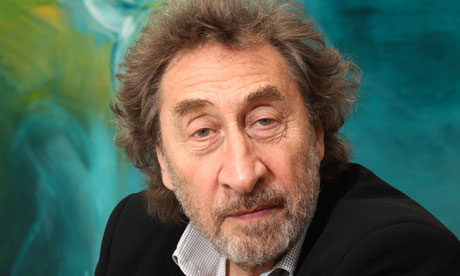 In a sense, Howard Jacobson wishes he hadn’t won the 2010 Man Booker prize. Yes, victory has made him £50,000 richer. Yes it has annulled the decades of resentment of all those clowns who overlooked his genius. And true, it means that the steady decline in sales of his novels since he first published nearly 30 years ago will be reversed.
 But still. The morning after unexpected victory, Jacobson allows himself some winner’s remorse. “I should have been in Rome now. They were going to launch the Italian translation of my novel The Act of Love under the title . . . ” he pauses to savour it better, “Un Amore Perfetto. I was looking forward to that.”
Instead, the author and journalist is obliged to spend most of this week in a stuffy room in London fielding questions from the likes of me. No way to celebrate. He looks to the door, awaiting the arrival of his bacon sandwich.
When did you know you’d won? “When Andrew Motion [the Booker chairman] stood up, I thought ‘Now is the hour. What if?’ And then I told myself: ‘Don’t listen to that devil.’ My mother had told me: ‘Be satisfied with being shortlisted.’ I was – for an hour.
“Then Motion described the winning book as ‘plangent’. And I thought: ‘Peter Carey’s won.’ then he said ‘melancholy’ and I thought: ‘Tom McCarthy or Damon Galgut have won.’ Only a beat before he said my name did I realise it was me.” At 68, Jacobson is the oldest Booker winner since William Golding. “I’ve been discovered.”
In 2001, Jacobson called the Booker “an absolute abomination – the same dreary books year after year”. He had given up hope. “I was bitter. It’s true. I couldn’t even get them to read me.”
After winning, Jacobson promised to spend the prize money on a handbag for his wife, TV producer Jenny. All £50,000? “Have you seen the price of handbags?” I tell him that the whole Guardian fashion desk is poised to offer him tips on which one to buy. “I don’t need tips. When I was teaching at Cambridge, I sold handbags on the market. I bought Jenny a new Mulberry handbag after I was shortlisted.” During the interview, Jenny steps in briefly to kiss her victorious hero. “That’s the bag!” says Jacobson.
Did Jacobson back himself at 12-1 to win “No, but Jenny did. Now she can buy her own handbags.”
Some are already writing up The Finkler Question as the first comic novel to win in the prize’s 42-year history. “That’s nonsense,” snorts Jacobson. “Kingsley Amis’s The Old Devils won in 1986. That was comic. Even Salman Rushdie [who won with Midnight’s Children] knows he is writing in the comic tradition of Rabelais and Cervantes.” In any case, to pigeonhole The Finkler Question as comic is to sell it short. Motion rightly said of Jacobson on Tuesday night: “He certainly knows something that Shakespeare knew – that the tragic and the funny are intimately linked.”
“One of the great things about us Jews,” says Jacobson, “is that we tell the best jokes. Part of the reason is we tell jokes against ourselves, before anyone else gets to do it.” But Jewish humour, please God, isn’t just a defence mechanism. I remind Jacobson that in his book about comedy, Seriously Funny, he described his youthful desire to see women’s throats. “I’ve always felt that desire. To get a woman to throw back her head in laughter is a hot thing. When I was eight and I made my mother’s friends laugh, that was erotic power. Clearly I only realise that retrospectively.”
Six decades on, is that why you write, to exercise erotic power? “Well I certainly like to control what my wife reads. I’d find it intolerable to hear her laughing at a book by another man.”
Like Shakespeare only more so, The Finkler Question links tragedy and comedy. Storylines of bereavement and thwarted hopes of belonging modulate Jacobson’s gags. Early in the novel its three leading protagonists meet for a bittersweet dinner. Sam Finkler, a populist Jewish philosopher (he writes De Botton-ish books called things such as The Existentialist in the Kitchen) is recently bereaved, as is his former teacher and fellow Jew, Libor Sevick.
The party’s third member, Julian Treslove, a failed BBC radio producer, is neither bereaved nor Jewish. But he desperately wants to be both. He’s that singular thing: a philosemite looking for a dying woman to love.
Jacobson claims to resemble Treslove. Even to the point of having a romantic wish (inspired by Puccini and Verdi’s operas) to see his lover expire in his arms? “Yes! Like Treslove I have the Mimi complex [Mimi is the dying heroine of La Bohème]. I used to boast that I knew more songs with the word ‘goodbye’ in them than anybody else.” It’s probably just as well Jenny, his third wife, isn’t in the room to hear this.
“I also feel like I’m a non-Jew who wants to be Jewish,” says Jacobson. Come on! “No, really.” He makes his Jewish upbringing in Manchester sound as thoroughly lukewarm and English as my C of E Sunday school – creating a sense of identity so nebulous that it’s easy to forget it ever existed. “We didn’t go to synagogue much. We didn’t have bacon at home, but eating it out was all right. We tried to fast at Yom Kippur.”
In this, his 11th novel, Jacobson is still writing about unromanticisable English Jews. Why? “Because they’re a captivatingly strange people. Philip Roth thinks English Jews have no balls. He’s wrong about that – not least because he doesn’t understand England or English Jews. He thought this is a hotbed of antisemitism. It has its moments, but it’s no hotbed.
“But we certainly have an inferiority complex. The first European pogrom was in England, not in Russia or Poland. When Oliver Cromwell allowed us back in, we were very much here on sufferance. When I was growing up it was: ‘Don’t draw attention to yourself, or there’ll be another pogrom.'”
That complex manifested itself even in his writing ambitions. “The novels I planned to write were never going to be funny books about Jews. They were going to be country house books. Only later on could I write what I knew I was best at writing about.”
But writing about what he knows about – English Jews – brings a risk, especially now the Booker win will make him more of a public figure, more read than ever before, especially by fellow Jews. “I’ve never had what Roth gets all the time – that opprobrium from other Jews for daring to write about Jews.”
Jacobson is hardly an orthodox Jew. “I was on a panel with the chief rabbi recently and we were discussing God. I said: ‘God really doesn’t care if I have a bacon sandwich.’ And the rabbi said: ‘God is in the details.’ I said: ‘No, the devil is in the details.’ I’m not an atheist – Dawkins convinced me I can’t be that – but I don’t think of God monitoring me closely.” He tries not to spill brown sauce on his Armani suit.
In the novel it’s Finkler, the Jewish philosopher, who bears most of Jacobson’s opprobrium. He’s the focus for the author’s fear that anti-Zionism can slide into antisemitism. Finkler is very nearly a self-hating Jew, one who is so anti-Zionist he speaks only of Palestine, never Israel, and even joins a comically narcissistic group called Ashamed to protest against what the Jewish homeland does in their names. Why? “I approach this as a lover of language and literature. When some people including Ken Loach [the film director] said he could understand antisemitism because of what the Jews were doing in Israel, I realised that these words – even from people who aren’t antisemites, even from Jews – could cause antisemitism.
“The papers you and I write for [he’s an Independent columnist] have very few voices speaking up against this, apart from Jonathan Freedland who is always calm on this – and me. I’m not saying antisemitism is on the increase, but I am looking. I think it’s irresponsible of a Jew not to. Especially a Booker-winning one.”
guardian.co.uk © Guardian News and Media Limited 2010
以下是来NPR上的一篇文章,可以让我们了解多一点作者雅克布森及其获奖作品:
by John Freeman
He has been called the British Philip Roth. He’s dubbed himself the Jewish Jane Austen.
But after tonight, Howard Jacobson’s most enduring moniker will surely be that of “Booker Prize-winning novelist.”

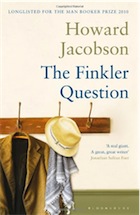
After being longlisted twice for the award, British author Howard Jacobson finally wins the Man Booker Prize for Fiction for his witty novel, The Finkler Question.
Jacobson is the author of 11 novels and has had several close calls on the Booker Prize “longlist.” He has finally had his day with The Finkler Question.
“The first draft of this speech is dated 1983,” Jacobson joked in accepting the award.
Just like Jacobson to use humor to unsettle.
His exuberantly comical, unflinching novels are, in Britain’s often toned-down literary world, warm but barbed reminders that all is not well.
Julian Treslove, the hero of this new book, is mugged on the way home. He could have sworn, but is not certain, that his assailants called him a Jew. In London’s highly assimilated literary world, Jacobson has often had to stand alone in pointing out the persistence of anti-Semitism.
In contrast to New York, where literary history has been written in the ink of so many Jewish writers, the thrust and torque of that question — what it means to be Jewish — can, especially for an American, sometimes feel strangely absent from the London scene.
Yet Jacobson has been asking the question for three decades in his fiction. Of all his novels, The Finkler Question comes at it most directly. It is a funny novel full of loss and friendship, tweaked by the amusing storyline that its hero isn’t Jewish at all, but has to learn what that means.
The U.S. publishing market has never quite caught on to Jacobson, now aged 68. How welcome, after a spate of recent winners aged 45 and under, that the Booker Prize will be reintroducing and giving a second lease on life to a writer nearly forgotten.
It recalls a passage from Jacobson’s 2004 novel, The Making of Henry, in which its hero ponders eternal life. “If anyone is going to be exempted [from death], shouldn’t it be the joyous, the kind-hearted, the exuberantly fleshly even? To those who have loved life shall more life be given.”
Tonight that was true.
John Freeman is the editor of Granta magazine and a frequent book reviewer for NPR.org.
