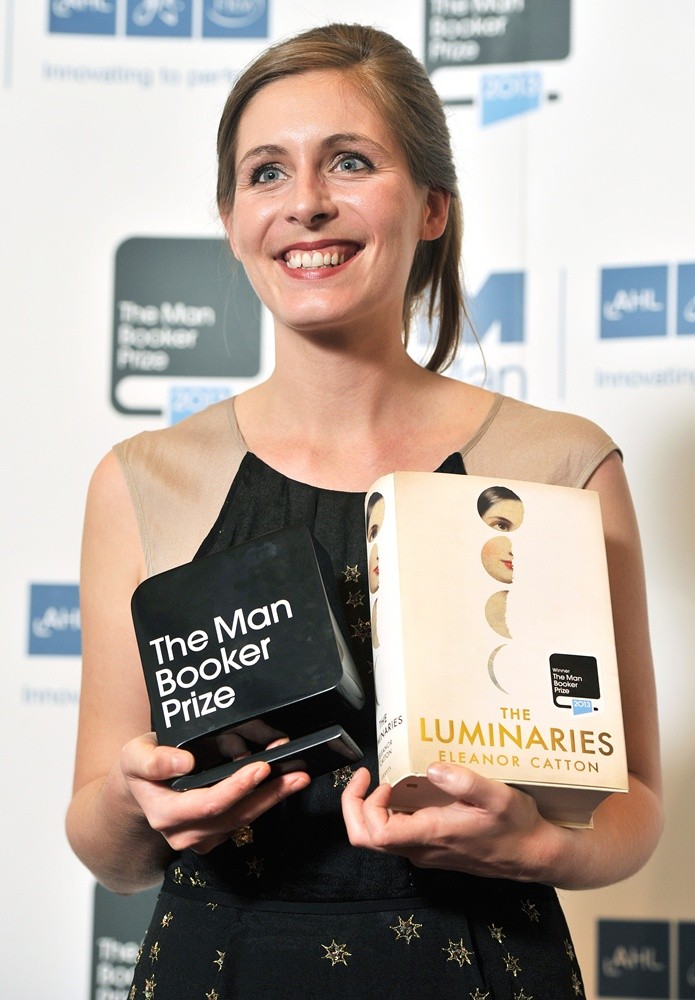
最年轻的布克奖得主埃莉诺•卡顿及其小说《发光体》

【这是我安排研究生陈妍颖同学写的一篇文章,介绍了本年度最年轻的布克奖得主埃莉诺·卡顿及其获奖作品《发光体》。文章已经在《文艺报》上发表。现转载于此,与大家分享。】

Eleanor Catton

10月15日,2013年度英国布克奖获奖名单新鲜出炉。新西兰小说家埃莉诺·卡顿,凭借其长篇小说《发光体》摘得桂冠。

作为第二个获得此项殊荣的新西兰作家,埃莉诺·卡顿创造了布克奖的两大历史之最—— 年仅28岁的她不仅是史上最年轻的布克奖得主,同时,其长达832页的获奖小说,也成为布克奖史上最长的一部获奖作品。

布克奖评审主席称:“这是一部耀眼、发光的作品,浩瀚却不涣散……我们反复读了三遍,对其进行了深度的挖掘,每一次阅读都会有非凡的收获” 。新西兰总理赞誉到:“这是新西兰人在世界舞台上的一个重大的成就……它证明了埃莉诺·卡顿突出的才能和勤奋。”

埃莉诺·卡顿1985年出生于加拿大,6岁时随家人回到新西兰。曾在坎特伯雷大学学习英语,并在惠灵顿的维多利亚大学现代文学研究所获得硕士学位。2009年,她获颁“年度小说黄金女孩”的称号。目前,卡顿居住在新西兰的奥克兰,并在马努卡理工学院教授创意写作课程。

卡顿的处女作《彩排》,在2008年出版之后便备受好评。此次获奖小说《发光体》是其第二部作品。卡顿于25岁时便开始创作该小说,并于27岁时完成。小说《发光体》能从此次参赛的151部小说作品之中脱颖而出,受到评委的青睐,主要有两方面的原因:一是其小说的结构和技巧,二是其小说的情节和内容。

在结构上,《发光体》最显著的特征便是其与占星术的联系。卡顿将这800多页的史诗巨著按照占星术的原则而安排。其中的人物不仅和十二宫图以及日月(也就是小说题目所指的发光体)相联系,并且按照预定的天体运行轨道彼此互动。

卡顿的这一创意来源于她对星座的兴趣。当她最初打算写一本关于新西兰淘金热的书时,她正好开始接触到星座。当她开始着手写该小说时,卡顿惊喜地发现三颗行星在射手座重合。通过一年的观察,她发现一些星球一直都跟随着彼此。于是她便萌发了把这样现象与小说相结合的想法。因此,卡顿使用了《天文和望远镜》杂志中的图表以及一个叫做虚拟天文馆的软件来安排各种星体的运行。小说中有12个与12星座相对应的“恒星”角色:一个毛利宝石猎人、一个银行家、一个新闻记者、一个旅店老板、一个金矿大亨、一个中国金匠、一个代销商、一个药剂家,一个船务代理商、一个法院职员、一个吸鸦片的淘金工人以及一个牧师。他们是这个故事里固定的恒星星座(每个人的星象图都决定着他的行动以及其作用)。在他们的外围,围绕着其轨道运行的是7个“行星”人物:一个寡妇和一个商贩、一个政客和一个监狱长、一个探矿者和一个妓女,最后还有作为阐释者的侦探穆迪。而这12个恒星角色和7个行星角色都围绕着小说中的“地球”角色:克罗斯比·威尔斯运行。小说中的一系列神秘事件也围绕着这个被谋杀的角色而展开。同时,小说的12部分,每一部分的篇幅均为前一部分的一半,正如月亮由圆到缺的变化过程。

这样的结构安排似乎有些复杂而矫揉造作,但事实上它是与小说主题是紧密联系的。该小说的悖论就在于:人物既定的命运和对自己命运的主宰之间的关系。同时,通过这样的结构安排,卡顿对于什么是小说,小说可以有怎么样的形式进行了探索。如果一个故事的情节已被预先设定,这会改变我们的阅读它方式吗?小说能给人们带来怎样的精神慰藉?小说的意义是存在于个体人物还是结构?​

从情节上来说,《发光体》是一部用传统的维多利亚式的悬疑小说。卡顿融合了威尔基·柯林斯和赫尔曼·麦尔维尔的风格,同时也有所创新。“当你最开始读的时候,你会觉得它像是一个慵懒的怪物,但是随后情节发展逐渐加快,扣人心弦。”评委们认为《发光体》是一部具有灵魂的小说,是一个关于爱,欲望,贪婪和谋杀的故事。小说中美、希望和爱最终战胜了贪婪与丑恶。即使读者完全不懂星相学,他们仍然可以享受这个故事。

小说以19世纪中叶新西兰南部岛屿西海岸的淘金热为背景,讲述了通奸、盗窃、阴谋、非法交易、敲诈以及谋杀等一系列悬而未决的犯罪案件:在1866年1月27日的晚上,刚刚到达新西兰霍基蒂卡淘金城的穆迪闯进了一个酒店的吸烟室。有12个男人正在那儿讨论一系列神秘事件:一个探矿者消失了,一个隐居者死亡了,一个妓女惨遭毒打。所有这些人都彼此相互联系,并与这些事件脱不了干系。小说的第一部分,用将近400页的篇幅回忆了12个人在这一天的经历,错综复杂的事件让他们最终在一个夜间会议上相聚。随着各个人物逐一诉说自己的故事,在新西兰南部岛屿上的霍基蒂卡小镇上所发生的一切也随之明了……

评委会主席罗伯特·麦克法兰认为《发光体》是一部宏伟的巨著。小说“复杂的结构让人惊叹,故事情节引人入胜,对那个充满黄金和贪婪的世界进行了充满富有想象力的描述。”他希望读者们不要因为其篇幅长度而望而却步,因为《发光体》就像是一个金矿,它给予读者的回报是丰厚的。相信每个读者都能从小说纷繁的人物中找到自己熟悉的影子。【作者:陈妍颖】

漫谈爱丽丝·门罗及其短篇小说“寂静”

【爱丽丝·门罗荣获诺贝尔文学奖之后,各种介绍性文章不少。我也给我的学生布置了一篇,让她从分析短篇小说“寂静”(Silence)入手,谈谈门罗的独到之处。作业完成得不错。拿出来与大家分享】

2013年10月10日下午1时(北京时间10月10日19时),瑞典学院宣布本年度诺贝尔文学奖获得者是被誉为“当代短篇小说大师”的加拿大女作家爱丽丝·门罗(Alice Munro)。

Canadian author Alice Munro

诺贝尔文学奖评审委员会认为门罗“以其精致的讲故事的方式著称,表达清晰与心理现实主义是她的写作特色”。门罗的小说世界主要展现普通女性的爱情和家庭生活:“表达清晰”是因为门罗的作品语言朴实,句式简短,故事发展脉络极为清楚;“精致”是因为门罗的作品“轻情节、重细节”,于细微的内心活动的描写就能展现出人物的挣扎与困境。如此,门罗就将故事娓娓道来,为读者提供极大的空间去深思故事中的每一个人物、每一处情节,由此获得更加深刻的人生感悟。

尽管门罗的作品早已蜚声世界文坛,获奖无数,但是对于更加注重长篇小说的中国读者来说,这位曾在上世纪80年代来过中国的短篇小说大师还是相当陌生的。有关门罗的相关译介和研究也相当匮乏。在她的十四部作品中,仅有2004年出版的短篇小说集《逃离》,由翻译家李文俊先生于2009年翻译出版。

作为门罗在中国最知名的作品集,《逃离》由八个短篇小说组成,从不同角度讲述了一群女人的“逃离”经历。《沉寂》就是其中较为经典的一篇。

《沉寂》以全知的视角描绘了四位女性的悲情沉寂。朱丽叶 (Juliet)原本是一位极有名气的主持人,在经历了女儿离家出走、好友离世等变故后,变得愈发否定现有的生活状态,她最后远离公众视线,埋头于书本,湮没于人流之中。女儿Penelope(佩内洛普)原本离家是要到“精神平衡中心”去追求纯粹而崇高的精神生活、远离充满铜臭气的物质世界的,但最终她还是回到了物质生活之中,过上了相夫教子的生活,只是她在母亲的世界中渐渐沉寂陌生。好友Christa(克里斯塔)原本乐观开朗,总是能够开解朱丽叶,但是在病痛的折磨下,她越来越郁郁寡欢,最后病重离世。最后一位女性是诱导着佩内洛普到“精神平衡中心”的琼安,她总是以一副领导者的姿态感化年轻人以宗教信仰为中心,远离世俗生活。但是到了最后,为了生存,琼安只能到商店当一名普普通通的理货员,“精神平衡中心”早已不复存在。

虽然故事情节简单,门罗的用词也不复杂,但是在故事结束之际,读者们会被故事中所营造出来的悲伤而无奈的氛围所感染,不自觉的投入到角色之中,体味到人生的许多不得已。这正是门罗寥寥数笔就勾勒出人物复杂的心理变化的魅力所在。

以朱丽叶为例,她的沉寂过程体现在多个方面。就信仰而言,她从开始的极其渴望自由、张扬个性、不屑宗教到最后成为虔诚的宗教拥趸的过程,门罗只描写了朱丽叶对一个词语的截然不同的态度,spirituality(性灵)。一开始,朱丽叶听到这个词语只会觉得恶心作呕;最后,朱丽叶却总希望人们重视自己的性灵,在宗教中获得从容与平静。就佩内洛普对她的意义而言,门罗只用了几个形容词就将各个阶段朱丽叶的情感跃然纸上。在佩内洛普离家之前,朱丽叶认为女儿给她带来的是delight (欢乐);最初知道女儿离家出走时,朱丽叶也只是哀求地哭出声来;女儿断绝与其所有联系的时候,朱丽叶觉得狂怒;到了最后,朱丽叶接受了女儿离她远去的事实,表面上采取着无所谓的态度,她连有女儿的事情都不愿意再与亲近之人提起,可见哀莫大于心死。读者们随着门罗的精妙用词会深深体会到朱丽叶的悲伤、无可奈何以及最终对生活的妥协。

那么,小说的主题意义到底在于何处?我们应当将小说的标题“沉寂”与小说集的标题“逃离”结合起来一起分析。小说题目 “silence” 一词,不仅是指几位女性的沉寂,更是她们梦想或是幻想的破灭,也是其自我意识的不断衰弱。而文中女性之所以沉寂,是因为她们逃离而不得:朱丽叶与琼安都想逃离平凡生活而终归于平凡;佩内洛普想逃离物质生活而最终被物质所牵绊;克里斯塔想逃离疾病却最终为其所缠。这正是现实生活中女性,或是所有人的无奈。因此,读者们也意识到了生活的无情,只能与角色们一起困于沉寂之中,屈服于世俗生活的要求之下。这种读者与角色的情感互通与互动正是门罗小说的精髓之处。

因此,虽然门罗自己也坦承其写作风格并不华丽,但是她的创作却胜在用词精确,在不多的篇幅中充分运用平实的语言描绘了普通人的小事,却又极其细致的捕捉到了每一位角色的每一丝心理变化,使得读者切身体会到了许多共同的人生困境,在小说中也体味着自己的经历。文字平实而意义深远,这正是瑞典学院将门罗赞誉为“当代短篇小说大师”的原因之一吧。【作者:韩晓萌】

【RT】Alice Munro: Her subject is ‘simply life itself’

The following is a repost from The Washington Post:

Alice Munro: Her subject is ‘simply life itself’

By Ben Dolnick, Friday, October 11, 12:40 AM

Alice Munro wins Nobel Prize for literature: Alice Munro, “a master of the contemporary short story,” receives the prestigious award from the Royal Swedish Academy. The Canadian is the 13th female literature laureate in the 112-year history of the Nobel Prizes.

In describing Alice Munro, the Canadian novelist Margaret Atwood once wrote: “She’s the kind of writer about whom it is often said — no matter how well known she becomes — that she ought to be better known.”

Atwood’s dictum is about to be put to the test: Munro, the revered 82-year-old Canadian writer, has just won the Nobel Prize.

In awarding her the prize — which comes with 8 million Swedish kronor, or about $1.2 million — the committee has made official what Munro’s legions of fans have been saying for years: She is the master of the contemporary short story.

Fans won’t be surprised to hear that Munro, famously modest, responded by asking that the attention be immediately shared. “When I began writing there was a very small community of Canadian writers and little attention was paid by the world,” she said. “Now Canadian writers are read, admired and respected around the globe. I’m so thrilled to be chosen as this year’s Nobel Prize for Literature recipient. I hope it fosters further interest in all Canadian writers. I also hope that this brings further recognition to the short-story form.”

In recent years, the Nobel Prize in Literature has become an occasion, at least in North America, for sheepish shrugs and head-scratching. Herta Müller, Mo Yan, Jean-Marie Gustave Le Cl éz io — for many of us, the Nobels have become doubly educational: We simultaneously learn of an author’s existence and find out that we ought to have been reading him or her all along.

This year, then, came as something of a relief. Those rumored to be under consideration — Haruki Murakami, Philip Roth, Munro — were all household names, more likely to be found on our bookshelves than in our crossword puzzles.

And even among those authors, none inspired quite the reverence among readers — and writers — that Munro does. Mention to a serious bibliophile that you like her and the conversation will shift to a solemn, almost embarrassingly private register, as if you’d interrupted cocktail party chatter to reveal a family secret.

This love seems always to be revealed with a certain hesitancy. This has mostly to do with the fact that Munro is explicitly a writer of short stories. Until she retired this year, her collections had been issuing from Canada as steadily as weather bulletins.

Beginning with “Dance of the Happy Shades” in 1968 and ending with “Dear Life” in 2013, her career has been a shower of stories. Thus, there is no single mountain peak — no “Beloved,” no “American Pastoral” — to which one can assuredly point and say: Read this and you’ll understand. Ask Munro fans which book to start with, and they’ll say, “Well, have you read ‘The Beggar Maid’? Oh, but what about ‘Open Secrets’? Or maybe ‘Hateship, Friendship’?” Pretty soon your suitcase is brimming with her essential works.

Munro’s publishers have tried, at various points, to cull the field. Everyman’s Library published a handsome volume of her selected stories in 2006. Vintage had done the same in 1997, and then again, more sparingly, in 2005.

Prize committees have done their parts to introduce her to the world, as well: She won the Man Booker International Prize in 2009, the National Book Critics Circle Award in 1998 and enough Giller prizes that she decided a few years ago to take herself out of the running.

But her books are just as much at home on the favorite paperbacks table as on the dais. She’s an author you read on the train, you read in bed, you read in happiness, you read in grief. She is, perhaps more than any writer since Chekhov (with whom she is constantly, and aptly, compared) an author whose subject is simply life itself.

In her second book, “Lives of Girls and Women” (1971), she wrote something like a credo for those who cherish this type of writing: “People’s lives, in Jubilee as elsewhere, were dull, simple, amazing, and unfathomable — deep caves paved with kitchen linoleum.”

Even among writers — a notoriously discontented lot — there was none of the typical carping or ­second-guessing going on Thursday. In fact, the news of her prize set off a virtual round of toasts.

Among the revelers was the short-story writer Jim Shepard, who said: “I imagine fiction writers everywhere today are celebrating the Nobel Committee having gotten it exactly right. There’s probably no one alive who’s better at the craft of the short story, or who has done more to revolutionize the use of time in that form, the result often being a 20-page story that demonstrates the breadth and scope of a novel.”

And Elizabeth Strout, author of “Olive Kitteridge”: “Alice Munro taught me things about writing that are immeasurable; she has dared in a quiet, steady way, to go to places of deep honesty. I will always remember the first time I read her story ‘Royal Beatings.’ I thought: ‘Look what she did — she has told the truth completely.’ And reading her story ‘White Dump’ for the first time — I remember that, too. I thought, ‘Look what she does, she goes wherever she wants, and I go with her.’ The authority she brings to the page is just lovely.”

Jonathan Franzen wrote in a 2005 paean: “Reading Munro puts me in that state of quiet reflection in which I think about my own life: about the decisions I’ve made, the things I’ve done and haven’t done, the kind of person I am, the prospect of death. She is one of the handful of writers, some living, most dead, whom I have in mind when I say that fiction is my religion.”

It’s somehow incongruous to imagine, but Munro will travel to Stockholm in December, climb onto the stage, and give a gracious, fitting speech.

Literature is one of those realms in which giving out prizes can seem not merely dubious but positively obtuse. Books like Munro’s are so deeply personal and idiosyncratic that it feels like a violation to subject them to the crude business of committee meetings and PR releases; you might as well storm a butterfly den with a klieg light.

But today, and from now on, that den will be a good deal more crowded. Alice Munro is a Nobel laureate, and the only natural response is delight. And then, of course, once the euphoria of justice done has passed, to pay the tribute that is beyond the power of any prize committee, even the one in Stockholm, to issue: to read her.

Dolnick is the author of “At the Bottom of Everything.”


乔根·兰德斯:民主体制一向被人高估

【多一种声音,多一种理解】

2013-09-29  译林出版社


乔根•兰德斯无法理解中国人对自身未来的悲观情绪。“我觉得这是一个很有意思的现象。在这次中国之行中,我接触的每一个人,包括各位来访问的记者,都表现出了对中国未来极大的忧虑和悲观。我很想知道到底是什么导致了你们的悲观?或者说,哪些地方的改变会消除你们的悲观?”兰德斯在接受记者专访时发出疑问,在这位利用历史数据预测出中国美好未来的教授眼里,中国人太擅长“杞人忧天”了。


记者:在《2052》这份报告中,你作了一个长达40年的预测。为何会选择40年这样一个时间跨度?你在报告中选取案例的原则又是什么?

兰德斯:没有人问过我这个问题。实际上,我在作这个预测之前,首先要判断现行的体系能够维持多久。如果现行的决策者能够在五年内改变世界,那么我最多只能预测四年;而依我目前的判断—现行的各国体制包括国家资本主义体制也好,其他经济体也好,至少能够保持在30年内一些基本的体制不变—所以我能够以此为依据,作出40年的预测。

我在书中也呈现了一些案例和逸事,我选择的原则当然是与我的理论吻合的、能够支持我观点的部分,至于有些零散的、与我理论相悖的细节,我不会关注。当然,若是最科学的做法,应该一方面提出支持我理论的案例,另一方面也应该提及与我观点相悖的论据。但我非常相信这本书所预测的结果,所以我还是这么做了。


记者:《增长的极限》及其后续研究大多属于情景分析,描述了多种不同的未来发展的可能性,并探讨及其利弊,建议制定相关的政策—这种方法通常可以被理解。而在《2052》中,你为何放弃情景分析,直接作出了到2052年宏观层面将会发生什么的预测?

兰德斯:40年前我们出版《增长的极限》,探讨了十二条未来可能发展的路径,其中六条是好的,六条是坏的。40年里,我做学术、自然基金会甚至后来到企业去,都在说服人们选择好的路径,摒弃坏的路径,却都失败了。现在的世界,相比较40年前,更加不可持续。所以我不打算再做情景分析,我想直接告诉人们,依然现在的愚蠢行为和决策,40年后的结果会是什么。


记者:你为何惟独对中国非常乐观?

兰德斯:我的确对中国非常乐观,但我确实是使用了现有的数据、利用计算机模型得出的结论。我有一些环境保护界的朋友,他们对于我有关“2052年还不会突破如石油、粮食和水等资源的极限”的结论也有不同意见,但我还是会利用数据演算结果说话。当然,这并不代表2052年之后,资源不会枯竭。我所说的,是至少在40年内不会发生的事情。


记者:从宏观角度看,中国经济的确在持续增长,但普通的民众感受到的却是“国富民弱”:中国GDP经济总量一路飙升的背后,中国人的劳动收入从1983年占GDP的56%,一路下挫到近几年的36%。除此之外,还有高涨的税收、通胀、房价、物价。你如何解释这些现象?

兰德斯:我当然知道问题的存在,但我也想说,中国人应该很清楚自己当下的生活远远比二三十年前要好得多。人们将经历社会的很多阶段,每一个阶段都有它的优势和劣势,都存在问题以及可被改善的空间。但人们从乡村到城镇,再到后工业化社会,总体上的改善是很明显的。我相信中国人没有人愿意回到过去,所以从宏观趋势上,的确是越来越好的。


记者:你在《2052》里强调政府强大的决策力是美好未来的一个重要因素,但对普通人而言,可能更需要一个个体生活得到改善,个体问题获得解决,个人声音被聆听的未来。

兰德斯:我在过去的40年里,经历了挪威、瑞士、美国三个完全不同的体制。以我的生活体验,我可以举一个反例:美国普通民众的收入在40年里几乎没有变化,美国全部的增长几乎都供养给了富人和精英阶层。美国人不愿意出国,要么是因为太穷了出不起,要么是对除了美国之外的任何事情都不感兴趣。如果我们把中国放到这样的政体下,做任何的决策都要聆听国民的意见,都要花上十年的时间讨论—比如像伦敦建机场,讨论了20年连个跑道的影子都没见到—如果中国是以这样的形式发展,一定比不上你们现有的生活。我来自挪威,在五六十年代的挪威,200多个政客和一批经济学家为整个挪威作出决策,挪威现在已经是世界上最富有的国家之一。我觉得这样非常好。

民主体制一向是被人高估的。人们对民主的误解,是以为民众的意见能够达成一致。在一个国家中,90%是民众,他们为10%的政客拿意见。但这90%的民众至少还要分成20种不同的意见,他们所想的是完全不一样的事情,最终的结果是互相制衡、争吵,达不成共识。


记者:所以可以认为,你觉得具有强决策力的政府更好?

兰德斯:首先我必须要说,我非常害怕回答这样的问题:民主政府也好,集权制政府也好,哪一种政府好?没有任何一种政府是最好的。每一种体制都有优势和弱势。我们看到了中国政府强大的决策力,你们也看到了它的弱点和缺点。民主政府也有长处和弱点。

我在报告中说中国有一个集权式体制,并认为它会持续在未来保持不变。原因是这个政府基本上还是希望能够提高民众的收入—至少从数据上看中国人的收入是一直在增长的—所以至少这个政府是在做事情的,而且增长从眼前来看还能持续至少三十年。我相信中国人不会选择中断这样一个能够让收入持续增长的政府。


摘自《时代周报》,记者赵妍


(译林出版社 微信号:yilinpress。)

On the Writer’s Elusive Self

【转帖自:The Washington Post

Joyce Carol Oates Interviews Herself

By Joyce Carol Oates, Published: September 13

All right, let’s cut to it — our audience, curiosity whetted by the ubiquitous social media, wants avidly to know: What is the most embarrassing thing that has happened to you lately?

Do you mean as a “writer” — or just more generally?


Don’t be circumspect! Interest in you, at least minimal interest, derives from your being a “writer.”

Well — I was in the grocery store yesterday, in the dairy section, when a woman who’d been staring at me quizzically asked, “Are you some kind of writer?” Vaguely, I shook my head no, as if I might not have heard the question, and eased away without glancing back . . .

And then?

And then someone who knew me breezed by saying in a loud voice, “Hello, Joyce!” — and the woman must have overheard . . .

That is embarrassing! Denying your own writer-self, and even as the cock began to crow, someone comes along and outs you! Is this some kind of absurd modesty?

I could not explain to the woman: “I am not ‘Joyce Carol Oates’ right now, but a shopper in a grocery store. And the dairy section is freezing.”

If police had arrived and demanded your I.D., you’d have had to confess — what?

My driver’s license, passport, social security — are all in the name “Joyce Carol Smith.”

Why not “Oates”? Continue reading

In Bleeding Edge, Thomas Pynchon takes on technology, 9-11 and so much more

【转帖自USA TODAY: Don Oldenburg, Special for USA TODAY 6:06 a.m. EDT September 14, 2013】

by Thomas Pynchon

Thomas Pynchon’s latest period piece, Bleeding Edge (4 stars out of 4) takes place in Manhattan’s “Silicon Alley” in the spring of 2001, during the calm between the dotcom collapse on Wall Street and the terrorist atrocities of 9/11.

Who better to fictionally address that surreal time than the author who, 40 years ago, in his masterpiece Gravity’s Rainbow, penned the opening line, “A screaming comes across the sky….”

Pynchon’s latest detective caper revolves around the picaresque adventures of Maxine Tarnow, young Jewish Upper West Side mother of two elementary-school boys, sort of divorced from her ex. She is a wisecracking, fearless beauty who runs her own uncertified anti-fraud agency and carries a purse heavy with a Beretta.

Like Pynchon’s past gumshoes (Oedipa Maas in The Crying of Lot 49), Maxine is quite the character. Her clientele of low-stakes hustlers elevates quickly when she investigates a suspicious computer-security company called hashslingrz. Its insidious geek billionaire founder Gabriel Ice may be skimming millions to fund Arab terrorists. But why?

That mystery opens the floodgates for the kinds of offbeat characters Pynchon is known for: Russian mobsters, a foot-fetish hacker, a black-ops killer, a self-made Zen master, a sleazebag pornographer, a professional scent sniffer—all while Maxine is yearning to be Angela Lansbury “dealing with class tickets.”

Of course, there are Pynchonesque names—Eric Outfield, Nick Windust, Conkling Speedwell, Bernie Madoff (oh, right, he’s non-fiction, but in here briefly because, hmmm, what’s that Maxine investigates?).

The Internet is a core character, too, from the underground Deep Web where online criminals hang, to the brilliant DeepArcher (think “departure”) alternative-reality, to alpha hackers who think that destroying the Internet means saving humanity. In fact, Pynchon’s powerful reasoning concerning the Internet should be cauterized into warning labels for websites, blogs, Facebook, Twitter and all the rest of it.

But Pynchon is no troglodyte. While embedding the book with concerns about the proliferation of technology, violence, media-saturated consumer culture and omniscient bureaucracy, he also fills it with telling mass-cultural references — from Kenan and Kel, Jennifer Aniston’s “Friends”-circa hair and Dragonball Z to Ally McBeal, eight-megabyte flash drives and the Macarena. “Nostalgia lurks,” as Pynchon writes..

As he often does, the author targets a grim, dark zeitgeist like some truth-seeking Stinger missile. He remarkably handles that disturbing day of Sept. 11, tilting the story and everyone in it, stunning the reader into an alternative strange-times reality where Pynchon comfortably dwells. Yet he spends no more than a couple of pages on the actual attacks, reflecting instead on its effect on his characters.

The truth is, Pynchon writes like no one else. He somehow injects love and humanity as the antidote to the dehumanization he fears and obsesses about.

He convincingly warp-speeds from one setting and characters to another within the same sentence. Even in his hyper-narrative ways, he remains the master of phrasing — cool, hip, explosive narrative fragments overstuffed with meaning.

Readers scarred by Gravity’s Rainbow, still muttering “incomprehensible,” will find this lucid dream far more accessible. This is not a start-and-then-put-down novel. It’s an exceptional literary novel that’s nonetheless a linear, joyous read set in extraordinary times.

Look, either you buy into Pynchon or you don’t.

If you’re willing to enter this bleeding-edge (def: more advanced and riskier than cutting-edge) novel, figure to come out the back page a different reader, probably better off.

At the end of the book’s advance proof sent to reviewers, the “About The Author” page is blank except for “TK.” That’s newsroom and printers’ lingo for “to come,” as in, “more content coming.” For Pynchon fans, it’s what you hope for — more heights of literary experience TK.