Give Me Your Heart应该是美国作家乔伊斯·卡罗尔·欧茨最新短篇小说集了吧。这位超级多产的当代作家所涉猎的题材也是非常广泛。这个集子里所收录的是作者创作的神秘和悬疑小说。颇能代表南方哥特小说的风格特色。以下是《纽约时报》上的一篇书评介绍。感兴趣者不妨一读:
Reckless Abandon
By ANDREA THOMPSON
In this story collection, Joyce Carol Oates, master of the American gothic, revisits territory she has long claimed as her own, a fictional realm where mild-mannered men turn into monsters and the maternal embrace is more often crushing than comforting. Her effusive, exclamatory prose can be — and has been — mocked, but there’s little doubt that Oates is a well-practiced storyteller. Too well practiced, perhaps: the impact of these precisely turned tales of violation and violence tends to be more mechanical than visceral.
Part of the problem is thematic. In story after story, a woman is childless (read frigid and controlling) or has given birth to a nasty piece of work. Girls are vulnerable, hurt by their fathers, looking for acceptance; and, in turn, they are murdered, transformed into objects of obsession or driven crazy. A woman’s bodily integrity is breached by rape or by pregnancy, by relinquishing her virginity or by nursing an infant.
“You entered my virginal body, you took from me my innocence, my youth, my very soul,” writes the woman at the center of the title story, which takes the form of a letter to the man who deflowered her 23 years earlier. Her rage remains fresh, yet there’s little sense of emerging danger or keen insight in her insistent narration. Instead, the story’s menace depends on typography, as if italics might turn overboiled sentences into something creepy rather than clichéd: “I have forgotten nothing . . . . While you, to your fatal disadvantage, have forgotten almost everything.”
Negligent, absent fathers disorient their daughters. In “Strip Poker” and “Nowhere,” fathers have been imprisoned for assault; in “Smother,” an emotionally distant father and an anxious mother cause a woman named Alva to recollect, or imagine, that they murdered her sister. Men and women engage in ceaseless warfare. “You did not love a man who didn’t inspire fear, though you might fear a man — many men — whom you did not love,” thinks a character in “The Spill.” In “Nowhere,” a teenage girl feels “weak with desire for the man, unless it was fear.”
Oates does deploy some original twists and suggestions of ambiguity, assets that emerge most forcefully in “Smother,” which is split between the fractured memories of Alva and the more collected viewpoint of her mother, Lydia, as she meets a pair of detectives in order to rebut Alva’s allegations. Initially, this device leads the reader to sympathize with Lydia: she’s a well-respected professor, Alva an itinerant artist’s model with a history of drug problems. Here and there, though, a destabilizing note emerges: the collection of pills in Lydia’s medicine cabinet, her deeply ambivalent feelings about motherhood. The story is wonderfully executed, and left tantalizingly unresolved.
Unfortunately, these moments are fleeting. Instead, one is struck by Oates’s infelicitous images and repetitions. Some are clearly meant to be resonant: the quarry at Sparta, the blue-collar town in upstate New York that makes regular appearances in her fiction, pops up several times, easy shorthand for downtrodden lives. But is there some deeper meaning to the fact that in three stories men are pointedly noted to have bands of fat settling around otherwise slender waists?
It’s disheartening, then, that the story that fits this collection’s pattern least, “Vena Cava,” also feels the most cynical. Here a grievously injured veteran returns from his third tour of combat duty in the “War Against Terror” feeling less than human. His body is filled with life-sustaining machinery and his hometown seems like a movie set — soon enough, a horror film. But as this sadly predictable story grinds to its conclusion, the response it engenders isn’t suspense or even a queasy disquiet; it’s a desire to get a desperate man’s cold march to a gory end over as quickly as possible.
Andrea Thompson is a freelance editor and writer.
 “
“ The association’s
 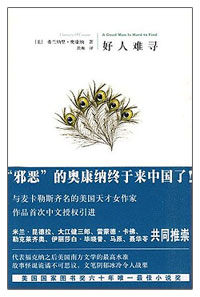 1957年,诗人兼文学评论家 T. S. 艾略特读到一本名叫《好人难寻》(A Good Man Is Hard to Find and Other Stories) 的短篇小说集,作者是一位崭露头角的美国南方女作家,名叫弗兰纳里·奥康纳(Flannery O’Connor)。这本书里有几篇小说让艾略特感到“毛骨悚然”,在写给友人的信中,他这样评价这位文学新人:“可以肯定,此人身上有一种奇异的天赋, 才艺当属一流,可是我的神经不够坚强,实在承受不了太多这样的搅扰。”如今,奥康纳已经去世四十多年,《好人难寻》中收录的几篇小说已经成为美国文学的经 典,此书的中译本已于今年出版。
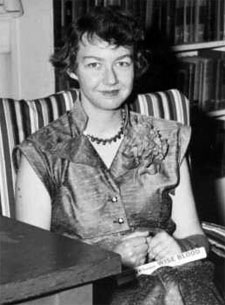 奥康纳在作品中描绘了美国南方的风物。《好人难 寻》中的故事大部分发生在南部的乡下,其中至少有四篇小说的主要人物是一对生活在农场上的母女(丧偶、守旧的老妇人和她性格孤僻的女儿),这些人物身上大 概有奥康纳和她母亲的影子。奥康纳笔下人物的言谈举止都带有南方特色,尤其是人物的对话,如果有机会阅读英文版,读者可能会从很多对话中读出美国南方口 音,比如《善良的乡下人》中的圣经推销员说:“You ain’t said you loved me none.”(“你还没说你爱我呢。”)、“I just want to know if you love me or don’tcher?”(“我只想知道你是不是爱我。”)


